At Simple Green, we believe sustainability shouldn't stop at what's inside the bottle — it should extend to what happens after the bottle is empty.
We're as committed to sustainability as we are to powerful, effective cleaning, which is why we are recognized by the U.S. EPA's Safer Choice Program. That commitment includes helping customers recycle plastic bottles the right way. Here's how to recycle your Simple Green bottles, and why it matters.
Every plastic bottle recycled is one less bottle that ends up in a landfill or in the ocean. In fact, according to the EPA, recycling one ton of PET plastic can save up to 7.4 cubic yards of landfill space. Recycling also conserves energy and resources, reduces pollution, and cuts down on the demand for new plastic production, which is a significant source of greenhouse gas emissions.
As part of our mission to create a safer world, we design our packaging with recyclability in mind. Most Simple Green bottles are made from PET (#1) and HDPE (#2), which are two of the most widely accepted plastics in curbside recycling programs across the U.S.
Here's a step-by-step guide to properly recycle or reuse your Simple Green containers.
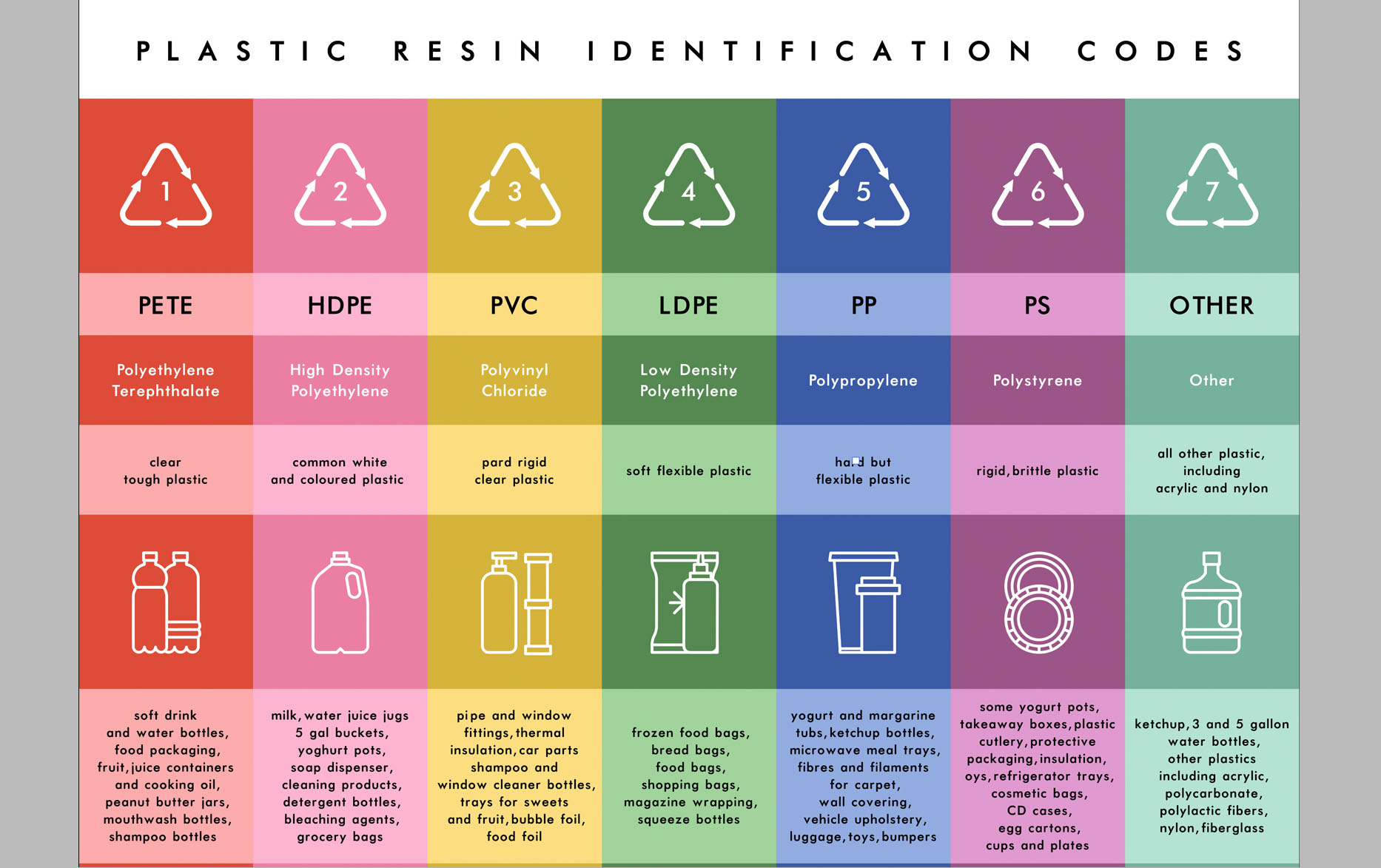
Not sure what type of plastic your bottle is made from? Look for the plastic symbol (usually a triangle with a number inside) on the bottom or side of the bottle. Here's a quick breakdown:
#1 (PET/PETE) - Lightweight, clear plastic, often used for clear beverage bottles.
#2 (HDPE) - Sturdy, opaque plastic, commonly used for cleaning products.
These two types of plastic are recyclable almost everywhere, and they're what we use for all our Simple Green bottles.
Learn more about plastic symbols and types here.
Before tossing that spray bottle in the trash, consider reusing it.
Used/empty trigger spray bottles: Save your trigger spray bottles to downpour from larger refill bottles or as dilution bottles from our concentrated refills.
Backups: Keep a few trigger bottles on hand as backups in case a spray head breaks or needs replacing. You can swap out the broken trigger with your backup bottle.
Just make sure any bottle you plan to reuse is rinsed and labeled clearly for its new purpose.
Here's how to be sure your bottle is ready for the blue recycling bin:
Up to 140 Fl oz: These are usually recyclable curbside. Check with your local city recycling service to be sure.
Over 140 Fl oz (but under 55 gallons): Some areas will also accept these for recycling. Call your local municipal waste service to be sure.
55-gallon drums and 275-gallon totes: These can often be reused in industrial settings. When no longer in use, you can usually drop them off at your local waste disposal facility or arrange a pickup with a local recycler.
When you recycle, you're helping reduce waste, conserve resources, and support a more sustainable future. At Simple Green, we design our products and packaging with sustainability in mind. By taking just a few extra steps to recycle your bottles the right way, you become part of that effort.