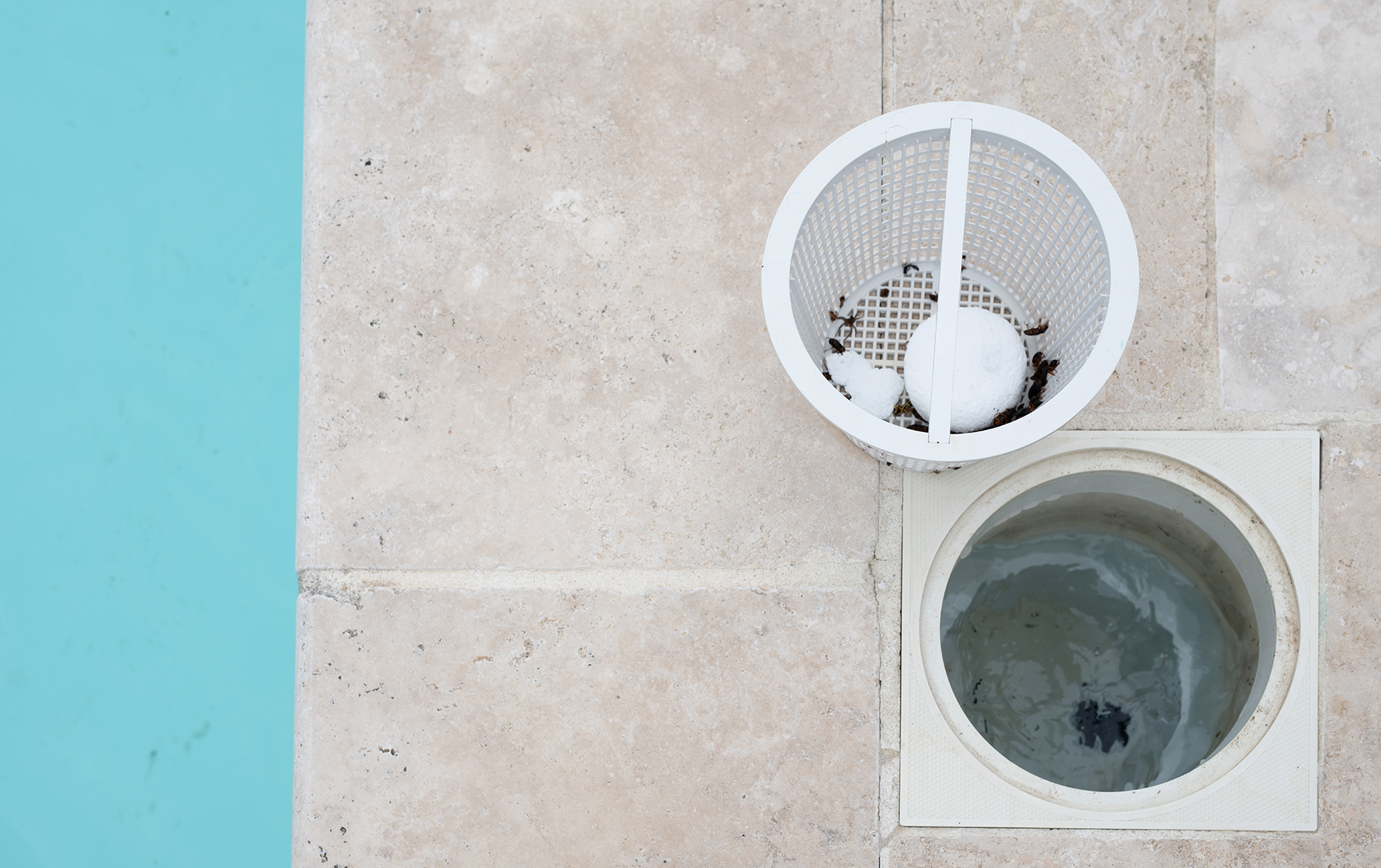
A swimming pool filter captures dirt, debris, hair, dead bugs, and even fine particles like bacteria, sunscreen, and body oils. Over time, the folds in the filter clog up, restricting water flow and forcing your pump to work harder, which shortens its lifespan and drives up energy costs. Regular pool filter cleanings also help distribute pool chemicals evenly, so keeping your filter maintained protects the whole system, not just your water.
There are three main types of pool filter systems: D.E. (diatomaceous earth), sand, and cartridge, with cartridge filters being the most common.
It's recommended that you clean your filter once a month in summer and every other month in winter if you're still running your pool.
Directions for Cleaning a Cartridge Pool Filter:
Simple Green doesn't require gloves, but you may want to wear them so you don't have to touch whatever your filter has caught, such as hair and bugs.
Turn off the pump. Shut down the entire pool pump and filtration system.
Release air. Slowly turn the air relief valve (usually on top of the filter) to release pressure.
Drain filter tank. Attach a backwash hose to the waste/backwash port, turn the multiport valve to Backwash, and let the tank drain fully.
Remove the top. Use a wrench or pliers to open the clamp handle and take off the compartment top. Be careful not to damage the seal gasket or O-ring — check your owner's manual if you're unsure.
Remove the filters. Carefully take the filter unit out of the tank. Then remove the individual filters and lay them flat on grass or another flat surface.
Mix Simple Green solution. In an empty spray bottle, mix 2 ½ cups of water with ¼ cup of Simple Green All-Purpose Cleaner. If it's been a while since you last cleaned your filters (or if you've never cleaned your filters), you can mix equal parts water and Simple Green.
Apply solution. Coat each filter thoroughly, making sure to spray between the pleats.
Soak. Let filters soak for about 10 minutes.
Clean the filter housing. While soaking, use the same solution to spray down the inside and outside of the filter housing. Rinse with your garden hose.
Scrub cartridge. After 10 minutes of soaking, expect a bit of loose foam on the surface for a short time. Gently scrub any particularly gunky areas with a soft-bristle brush, taking care not to tear the filter.
Rinse filters. Starting at the top and spraying downward, rinse each filter with a hose.
Lubricate the O-ring. Apply lubricant to keep it in good condition. Replace it if it's dry-rotted, cracked, or worn.
Replace the filters. Secure them back in the housing, replace the top, and close the clamps.
Turn it back on. Restart the system with the air relief valve open until a steady stream of water sprays out, then close it.
Check pressure. Confirm the pressure gauge reads normal. An off PSI may mean the filter wasn't replaced correctly. Note the new pressure so you know when it's time to clean again (typically once pressure rises 8–10 PSI).
Rinse area. If you cleaned on grass, spray down the area to dilute any remaining Simple Green.
A small amount of loose suds on your pool's surface for a day or so afterward is normal and safe for swimmers. It will go away on its own.
What to Know About TSP and Muriatic Acid
Many DIYers turn to trisodium phosphate (TSP) and muriatic acid to clean their pool filters. Both TSP and muriatic acid are toxic and require you to wear protective rubber gloves, goggles, and a mask when cleaning.
Simple Green All-Purpose Cleaner is a non-corrosive formula that can be used as a pool filter cleaner. It is aggressive on heavy soils and greasy residue, but gentle enough to clean filters without harming the material. The biodegradable* formula won't leave behind harmful residue to circulate into your pool water.
*Liquid biodegrades 80% within 28 days after disposal into a typical sanitary sewer or septic system.